Marketing Strategy Workbook: From Blank Page to Actionable Plan
Have you ever sat down to plan your marketing, only to find yourself staring at a blinking cursor or a blank notebook for an hour? The cost of indecision in marketing is high. Every day without a clear strategy is a day of wasted effort, missed connections, and budget spent on activities that don't move the needle. This is exactly where a Marketing Strategy Workbook earns its value. It is far more than a collection of templates; it is a structured thinking tool designed to guide you from scattered ideas to a concrete, executable plan. Whether you are a solo creator building a personal brand or a team leader steering a product launch, a well-designed workbook transforms abstract concepts like "positioning" and "brand voice" into manageable, actionable steps.
Why a Structured Workbook Beats a Blank Notebook
The human brain is excellent at having ideas but terrible at organizing them into a coherent strategy without external structure. A Marketing Strategy Workbook functions like a skilled consultant sitting across the table from you. It asks the tough questions you might otherwise avoid. Instead of a vague prompt like "Who is your audience?", a great workbook asks, "What specific problem does your ideal customer face on a Tuesday afternoon, and how does your solution fit into their existing workflow?"
Key characteristics of an effective workbook include:
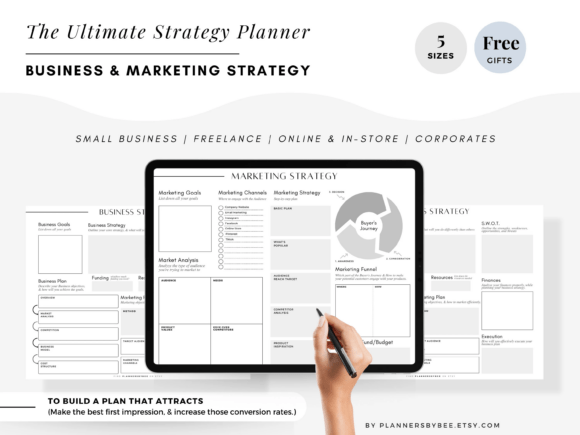
- Integrated Frameworks: It doesn't just mention SWOT or the Customer Journey; it provides a dedicated space to work through each model step by step, ensuring you don't skip the hard parts.
- Iterative Structure: Good strategy is not linear. A quality workbook includes built-in loops that encourage you to revisit your answers after completing later sections. You might define your value proposition in Chapter 2, only to refine it completely after mapping your competitors in Chapter 5.
- Tangible Outputs: The ultimate goal is not a filled-out workbook, but a set of decisions. The best workbooks force you to prioritize, choose a direction, and define specific KPIs. You walk away with a roadmap, not just notes.
- Constrained Creativity: Paradoxically, constraints breed better creative work. By limiting your options through structured prompts, a workbook forces deeper focus on the opportunities that truly matter for your specific context.
Real-World Applications Across Different Roles
The beauty of a Marketing Strategy Workbook is its adaptability. While the core principles remain the same, the practical application shifts dramatically depending on who is using it and for what purpose.
For the Entrepreneur Launching a Product
When you have limited runway and massive pressure to acquire customers, a shotgun marketing approach is a luxury you cannot afford. A workbook helps you rigorously define your Ideal Customer Profile (ICP) and map your go-to-market channels. For example, a SaaS founder might use the workbook to segment their market and discover a "hungry" niche of mid-sized logistics companies, instead of wasting budget targeting everyone vaguely interested in "efficiency software." The workbook provides the discipline to focus on the one channel that will deliver the highest ROI in the first 90 days.
For the Freelancer or Independent Consultant
When you are the product, marketing yourself often feels awkward or sporadic. A Marketing Strategy Workbook helps you formalize your personal brand strategy. You systematically identify the industries you serve best, the specific results you reliably deliver, and the proof points that build trust. Instead of guessing which content to post on LinkedIn, you develop a content ecosystem based on your core expertise. A freelancer might realize through the workbook exercises that their "generalist" positioning is costing them premium clients, prompting a strategic pivot to a narrow, high-value niche.
For the Marketing Team in a Commercial Environment
Misalignment is the silent killer of marketing budgets. When the content team is chasing awareness, the ads team is focused on conversions, and the product team is talking about features, you have chaos. A shared Marketing Strategy Workbook acts as the single source of truth for the entire department. It ensures everyone understands the primary goal for the quarter. The exercises in the workbook help bridge the gap between high-level business objectives and the specific campaigns the team will execute. It turns abstract goals like "increase brand loyalty" into a measurable retention campaign with clear messaging guidelines and channel assignments.
For the Creator or Educator Building an Audience
Consistency is the engine of growth, but burnout is the enemy. A creator using a workbook can map out their value pillars—the core themes they consistently explore. This allows for efficient content repurposing. A YouTube video becomes a blog post, a podcast episode, and a series of social media snippets, all guided by the strategic framework outlined in the workbook. It shifts content creation from a daily scramble for ideas to a systematic production process aligned with the audience's deepest needs.
The Tangible and Intangible Benefits of Using a Workbook
Beyond the obvious strategic clarity, adopting a workbook-based approach yields several powerful, often overlooked, benefits.
- Efficiency: It drastically reduces the time spent wandering in the "what if" phase. You systematically evaluate and eliminate weaker options, freeing up mental energy for execution.
- Confidence in Decision Making: A plan born from thorough exercises is easier to defend to stakeholders, investors, or your own doubting inner voice. You spend less energy second-guessing and more energy acting.
- Institutional Memory: A completed workbook becomes a valuable document. Next quarter, you can look back and see why certain decisions were made. You can update the strategy without starting from zero, accelerating your planning cycle over time.
- Improved Communication: Working through a workbook creates a shared vocabulary within a team or between a freelancer and a client. It sets clear expectations and makes abstract marketing concepts concrete and discussable.
Practical Considerations for Choosing and Implementing a Workbook
Not all workbooks are created equal. Selecting the right one and using it effectively is key to getting results.
Format Matters: Do you work best with pen and paper, free from digital distractions? A physical workbook might be your best bet. If you collaborate with a remote team or want to easily share and update your strategy, a digital version in Notion, Google Docs, or a dedicated tool like Miro is more practical. Consider your primary workflow before committing.
Depth vs. Usability: Some workbooks are incredibly comprehensive, exceeding 100 pages. Others are lean, designed to be completed in a single focused afternoon. If you are a busy operator or new to strategic planning, start with a leaner template. The goal is a finished strategy, not a perfectly filled notebook. You can always dive deeper into specific frameworks later.
Avoiding the Perfection Trap: The biggest risk of using a workbook is getting stuck on one question. Do not aim for perfect answers on the first pass. Use a pencil or a draft document. The goal is to get the core ideas down so you can see the holistic picture. You refine later. Block out dedicated "strategy time" in your calendar and treat it as an appointment with your business's future.
Drive Accountability: A workbook is only as valuable as the action it drives. When you finish a section, define the immediate next step. Share your roadmap with a colleague, a mentor, or your team. Public commitment makes implementation far more likely. The best strategy is the one that actually gets executed in the real world, and a well-used workbook is the bridge between intention and impact.